



I recently went to a discussion panel about AI sovereignty.
As a humble freelancer & YouTuber, I didn’t think this would really apply to me. It sounds like a topic for governments and lawyers.
However, by the end I was seriously thinking about how I was becoming very dependent on Claude, and wondering if there were any alternatives.
Three people led the discussion:
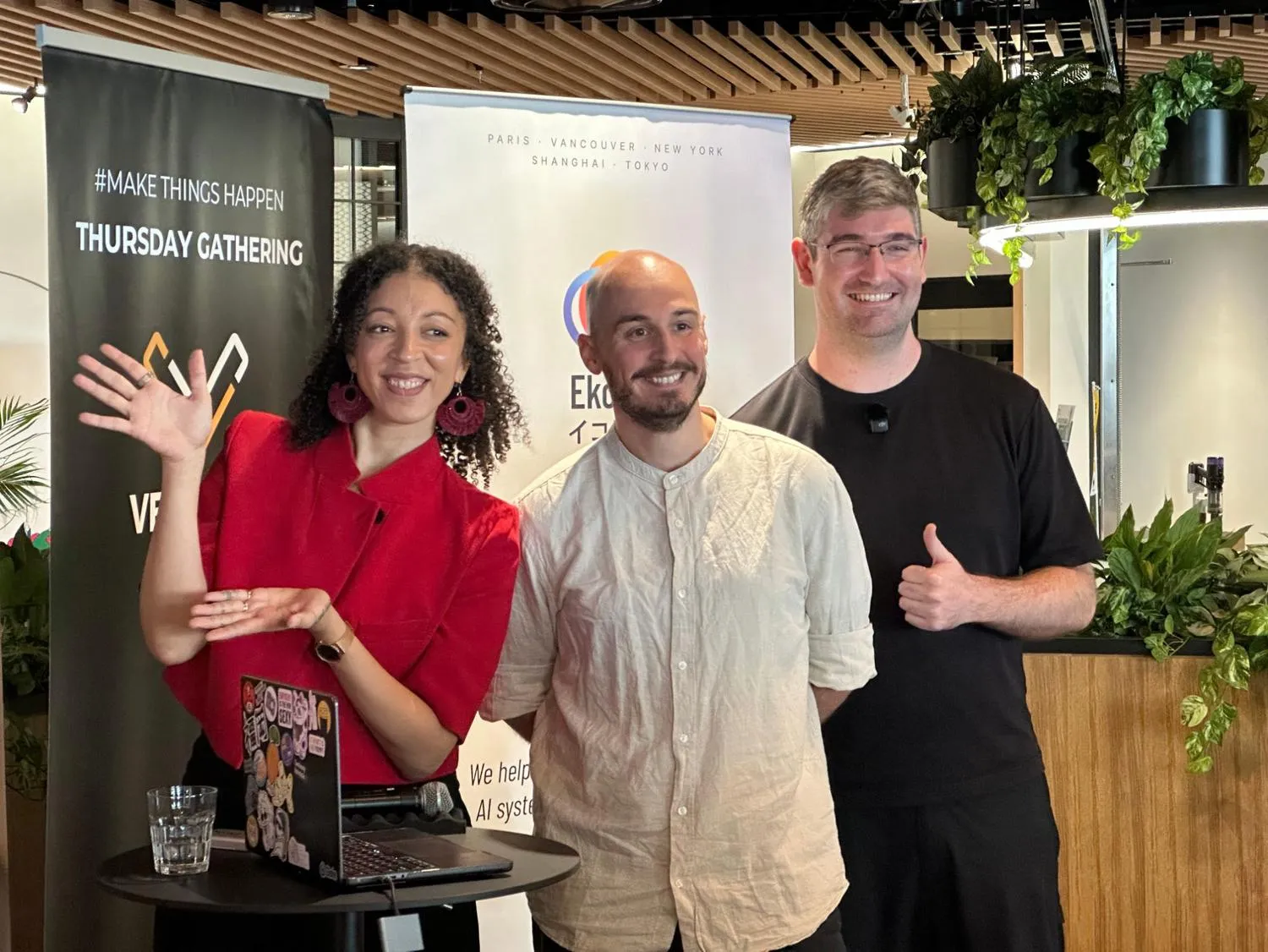
Alice Ballé: Relationship designer and PhD researcher based in Japan. Communication and branding strategist at Ekohe, a company that builds AI systems its clients fully own.
Roland Haller: French-Swiss advisor who helps Japan work with international audiences. Creative director at Tsunagaru, a Japanese company that helps regions of Japan reach visitors and customers overseas.
Adam Curnow: Cybersecurity expert from KarasuSec, which helps startups with IT operations and security.
What is sovereignty?
It’s a big word for a simple question:
Can someone else switch off, or deny access to the tools you depend on?
I’ll put it even more bluntly. Right now we are all using ChatGPT (OpenAI) or Claude (Anthropic) for our daily work. The market is dominated by just two companies, in one country (USA).
For many people, these tools have become irreplaceable. But the companies and the country they are based in can’t be fully trusted. This is a concern I hear from many European, Asian, and even Australian companies.
The judge who couldn’t book a hotel
Alice started with two stories.
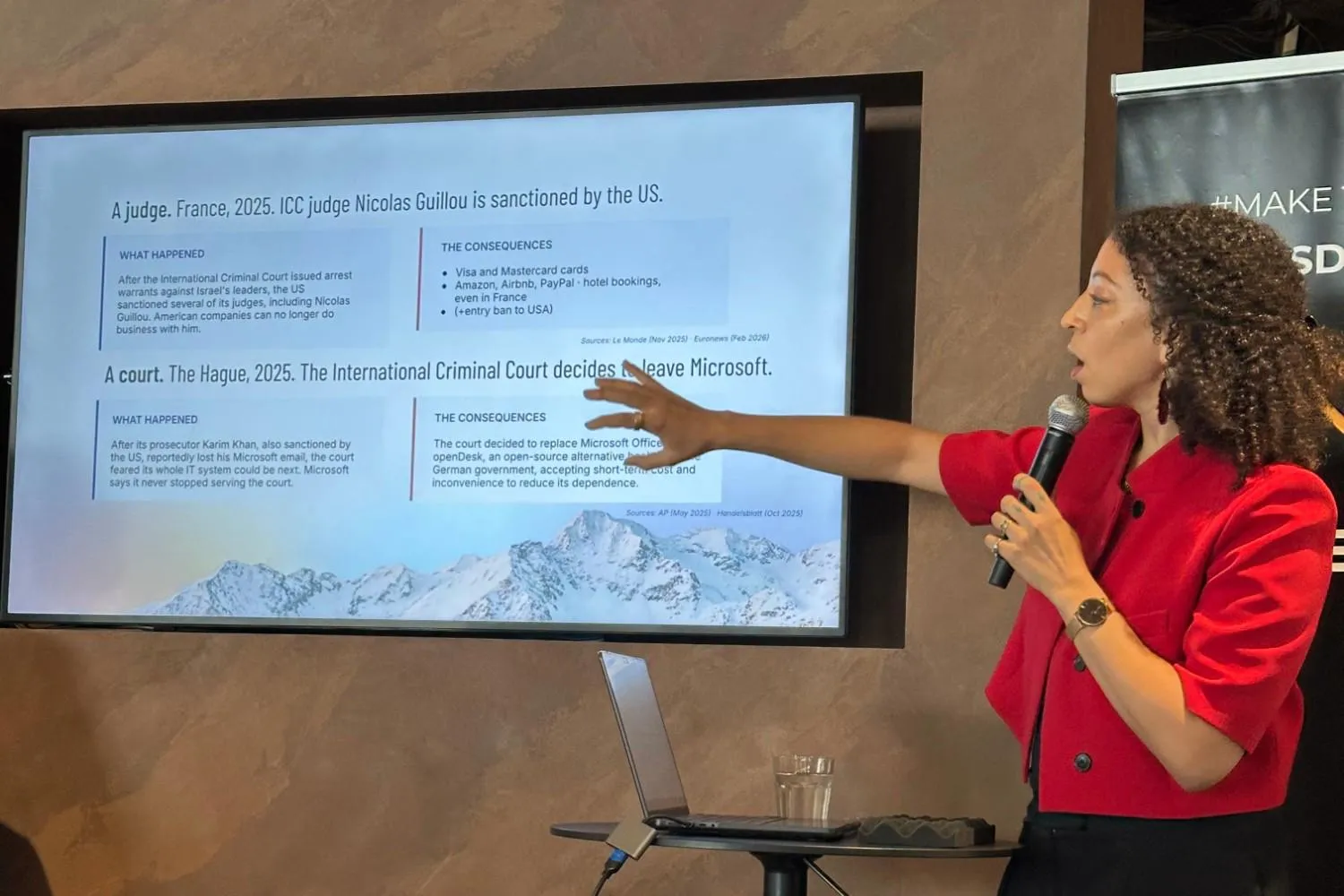
A judge
After the International Criminal Court issued arrest warrants against Israel’s leaders, the US sanctioned several of its judges, including France’s Nicolas Guillou. His Visa and Mastercard cards stopped working, and he lost Amazon, Airbnb and PayPal. Hotel bookings were cancelled, even in France. He’s also banned from entering the US.
A court
The ICC chief prosecutor, also sanctioned, reportedly lost his Microsoft email. Microsoft says it never stopped serving the court, but the court feared its whole IT system could be next, so it decided to replace Microsoft Office with openDesk, an open-source alternative backed by the German government.
You are already vulnerable
Think about that first example - a French judge, living in Europe, was cut off from everyday life by a decision made by American companies. He didn’t actively choose to depend on these American companies. He just used the same cards and websites as everyone else, and most of them are American.
The same kind of cut-off has already happened with AI tools. In June, the US government ordered Anthropic to block foreign users from its newest AI models.
In countries like Belarus and Russia, residents cannot access ChatGPT or Claude at all. My own father (an Australian citizen living in Belarus), is not able to use these tools for work. It feels like being 10 years behind.
The bottom line is that we are very dependent on these companies, and completely at their mercy if they decide to deny us access.
What this means for a small business
You and I are not going to be sanctioned by the US government. But the same thing can happen on a smaller scale.
- The rules change. In January, Anthropic blocked third-party tools from using Claude subscriptions. People who had built their daily work around those tools had to change how they work.
- The price changes. If your business depends on one tool, you’ll pay whatever it costs next year.
- A tool you use depends on them too. Many chatbots, Shopify apps and email tools run on OpenAI or Anthropic in the background. If they lose access, so do you.
A good test is to ask yourself: could I still finish this week’s work if my AI tool stopped working tomorrow?
My answer is that I could, but much more slowly. I use Claude to turn my videos into blog posts and to find code changes in Shopify themes, and of course to code! I would have to go back to doing everything by hand.
A global monopoly
Adam brought up a perfect example of another monopoly, further up the chain: ASML.
Most people have never heard of it. It’s a Dutch company, and it’s the only one in the world that makes the machines needed to produce modern computer chips - the ones used in iPhones, computers, and for running AI tools.
So the whole chip industry depends on one company in one country.
I got curious and looked up who holds the other links in the chain.
| Link in the chain | Who controls it | Country |
|---|---|---|
| Raw materials (rare earths) | Chinese processors, about 90% | China |
| Chip materials | Japanese chemical makers, over 70% of one key chemical | Japan |
| Chipmaking machines | ASML, the only maker | Netherlands |
| Chip factories | TSMC, about 90% of advanced chips | Taiwan |
| Chip design | Nvidia | United States |
| AI models | A handful of AI labs | Mostly United States |
Japan’s bet is on physical AI (robots)
We were in Fukuoka, so the conversation turned to Japan.
Japan’s big bet is on physical AI, or in other words, robots.
Alice said Japan is very aware of its dependencies and tries to keep them low. Even with things like food sources, rice and so on. She gave three reasons it’s betting on robots:
- A competitive advantage since it’s already behind on AI software
- Aged-care support for an ageing population
- Less reliance on immigration, which she pointed out is a kind of sovereignty too
Adam looked at it from the hardware side. Japan has always focused on physical goods rather than software, he said. It already makes the highest-quality hardware, so it makes sense to build on that strength. And AI helps Japan close the gap it has in software.
Alice mentioned a physical AI centre in Kumamoto, and Nick from Fukuoka Now, who I was sitting next to, pointed me to a robot maker in Kitakyushu, so I looked both up afterwards.
- Kumamoto: a development centre announced in July, near TSMC’s chip plant, where companies and universities will work on putting AI chips into robots and cars.
- Kitakyushu: Yaskawa, a robot maker that has been around since 1915 and now has a ten-year plan built around physical AI.
Both are a short train ride from where I was sitting.
Who is responsible for what AI does?
This one started with a worry from Roland: are we becoming weaker thinkers because we rely on AI so much?
Kristi, in the audience, answered that people are still responsible for what their AI does, so they still have to think.
Roland replied that responsibility is also a matter of regulation. We hold the person behind the AI responsible, but only because a law says so. Then he gave an example: Google, before and after it started writing answers itself.
| What Google does | Who is responsible | |
|---|---|---|
| Classic search results | Points you to other people’s pages | The people who wrote those pages |
| AI Overviews | Writes the answer itself | Google, because it created that content |
I checked afterwards, and a court in Munich ruled along those lines in May. It’s an early ruling and Google is appealing.
The same question applies to more than writing, because AI tools now take actions too. They post things, send emails, share private information and make changes on your computer.
From the room
Then Adam turned it over to us. Did anyone have experiences or concerns about specific tools?
For me, memories and context are the most valuable part of these tools. After months of use, an AI assistant knows my projects, my preferences and how I like to work. That’s worth more to me than the model itself.
So I want to know I can jump ship and move to another service easily. I don’t like feeling that my data is being held hostage.
Kanji, in the audience, said that for him the problem is that governments can’t be trusted, and that’s why he likes what Pavel Durov is doing with Telegram. Durov is the founder of the messaging app, which has around a billion users, and he was detained in France in 2024.
Adam’s own advice was practical. Know what your tools are doing and how they’re doing it. Manage the levels of access you give them, and understand those levels well. If read-only access is enough, give read-only.
He also brought up CrowdStrike. In 2024, one faulty update from that security company crashed millions of Windows computers and disrupted airlines and hospitals. His point was that staying updated is not always the best thing. Some systems are safer kept off the network completely, which is called “air-gapping”.
Kristi then brought up Belarus, as an example of being exposed to your own government. In 2020 the internet went down across the country around the presidential election. The government blamed cyberattacks, but experts called it a shutdown. The government also cracked down hard on the people organising the protests, and on the Telegram channels activists used to organise them.
That’s what Roland responded to. Being European, he had been more in favour of regulation throughout the discussion. But an all-powerful government like the one Kristi described is a different thing. To him it’s the same problem as everything else we’d talked about: a single point of failure. Government shouldn’t be so centralised, he said. Laws and regulations should come from various organisations, not from one all-powerful government.
So the room didn’t agree on how much to trust governments. Kanji would rather not trust them at all, while Roland wants rules, as long as they don’t all come from one place.
Alice’s three tips
Alice closed with three tips, and they make a good checklist for any small business.
- Know who, what and where you depend on. Write down the tools your business runs on. For most small businesses that list is short: payments, your website or store platform, email and documents, and now an AI assistant. Then ask what each of those depends on.
- Address your risks and pick your fights. You can’t fix everything, and you don’t need to. Pick the one or two things that would stop you earning money if they vanished.
- Explore the alternatives. Try them now, before you need them.
Roland had a good way to picture the first one. Software can come with a Software Bill of Materials, or SBOM: a list of every component, library and licence that goes into an application. He compared it to the ingredients on food. His point was that it’s important to know exactly what goes into the tools you’re using.
What I’m doing next
I’m not going to stop using AI tools, because they’re too useful. But I do want a plan B that I’ve actually tested, starting with the thing I care about most, which is my memories and context.
This is the first post in a series. In the next ones I’ll look at:
- How to migrate your memories and skills to another AI
- The best alternatives to ChatGPT and Claude
Thanks to Alice, Adam and Roland for leading the discussion. If you’ve ever been locked out of a tool your business relies on, I’d like to hear how you handled it.
If you want to get in touch with the speakers, here’s where to find them.
| Speaker | Website | |
|---|---|---|
| Alice Ballé | alice-balle.com | |
| Adam Curnow | karasusec.com | |
| Roland Haller | rolandhallercom.wordpress.com |
See you in the next one!
Ed