



Quick summary:
Keyword research is becoming less important in 2026.
Google and AI search understand meaning, so for both SEO and AIO (AI optimization), covering a topic well matters more than matching exact keywords. Plan your site like a book, use free data from Google, and save exact keywords for titles and URLs of your pillar posts.
Keyword tools are expensive
As of October 2026, Semrush starts at $139 a month and Ahrefs at about $129. Mostly SEO professionals pay that, but most small businesses do not. It makes keyword research hard to do on your own.
No problem though, because keyword research isn’t always needed.
My philosophy: topical authority and topic clusters are more important than keyword research in the age of AI. Exact wording matters less, because search tools now do a kind of fuzzy search, looking for synonyms and meaning.
Why exact keywords matter less now
Google matches meaning
Google’s ranking systems guide lists three AI systems (RankBrain, neural matching and BERT) that relate the words in a search to concepts. So a page can rank for a search without using those exact words.
Search Console now thinks in topics too. Its query groups use AI to group similar searches. In Google’s example, the “seo” group covers “search engine optimization”, “seo website” and even the German “seo optimierung”.
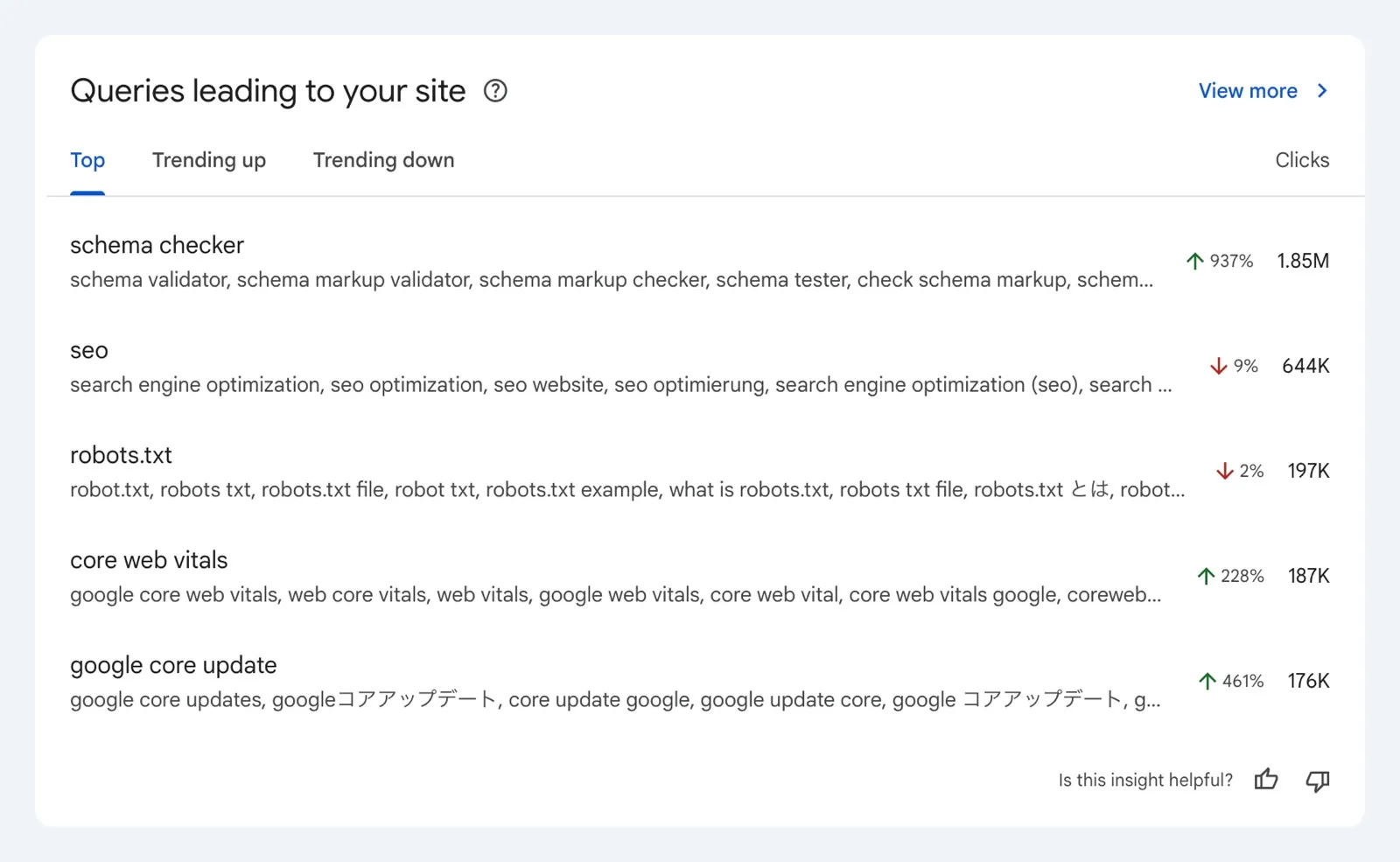
Query groups in search console. Image: Google Search Central, CC BY 4.0.
One page ranks for hundreds of keywords
Ahrefs studied 3 million searches and found that the average #1 page also ranks in the top 10 for nearly 1,000 other keywords (the median was about 400).
Google also says 15% of searches every day are new. No keyword tool can list those, but a page that covers its topic well can still rank for them.
AIO: AI search splits questions into topics
According to Google, AI Overviews and AI Mode may use query fan-out: they run several related searches across subtopics, then put the answer together. Google also says no special optimization is needed for them, only helpful content written for people.
That’s why I treat SEO and AIO as one strategy, and why I don’t think SEO is dead. If your site covers all the subtopics of its subject, AI tools have more reasons to pull from it.
By the way, you can check your ChatGPT traffic in Google Analytics.
It matters even less for International SEO
Keywords matter less when your website is going to be translated. You can’t control the exact keywords when your site is in five languages, some of which you can’t read.
AI translation has gotten really good, and it will mostly find the most common way of saying something in the target language. But you can’t micromanage it, especially not at scale.
Keep a human involved, though. Google’s spam policies list translation as one way to mass-produce low-value pages, but Google has said machine translation is fine when a human reviews it. I’ll cover this properly in my guide to international SEO and auto-translation of multi-lingual websites.
What remains after translation is the topics you choose to cover: your pillar posts and the satellite posts around them. They build the subject matter and authority of your store.
When to think about keywords
In my opinion, exact keywords still matter in two places, especially on pillar posts:
- The page title (the H1, and the SEO title if it’s different)
- The URL
Even here, I’d focus on clarity. Don’t dehumanize a title because a keyword tool told you it would be better.
Write for humans, and use your gut. SEO is not a science, it’s closer to a humanities subject. There’s a lot of trial and error and intuition involved, like any kind of writing or storytelling.
How to do keyword research in 2026
1. Start with Google’s own data
Google Search Console
Search Console should be your go-to for keywords and how your site is doing. If you’re getting a lot of impressions for a group of related searches, that’s an idea for a satellite post or a whole cluster.

I explained how I use it in finding SEO content for Shopify.
Google Keyword Planner
Keyword Planner (part of Google Ads) is the free tool for checking search volume. If you’re not running ads it may only show ranges like 1K–10K, which is somewhat vague but still enough for planning. And the bid ranges show which searches have commercial intent.
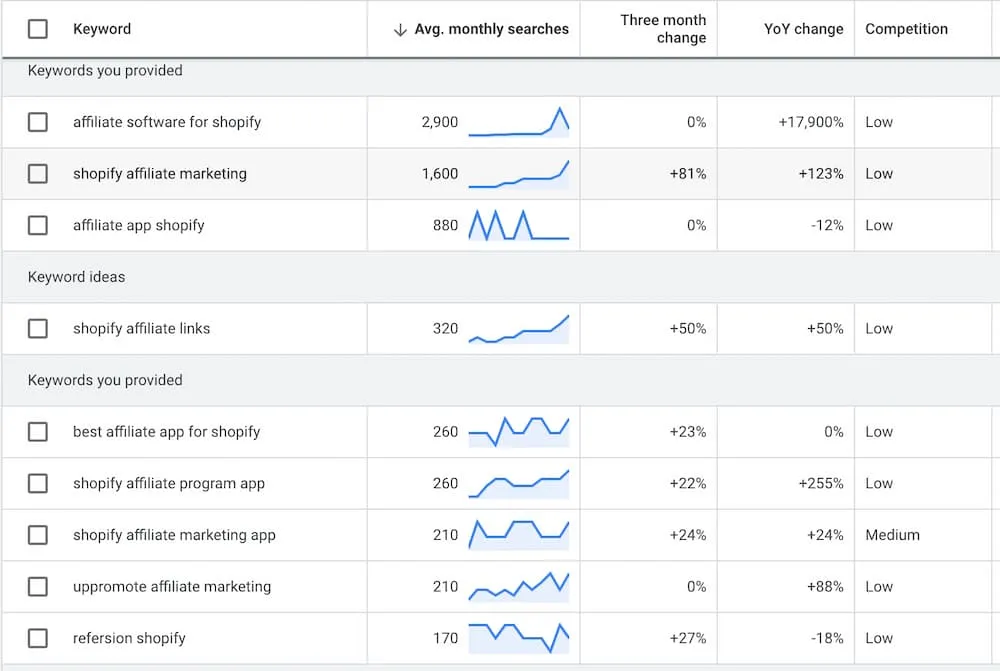
2. Use tools that get their data directly from Google
AlsoAsked shows the People Also Ask (PAA) questions for any search, and how they branch into more questions. Google builds these questions from what people search, so you can trust the wording. You get a few free searches, and paid plans start at $12 a month.
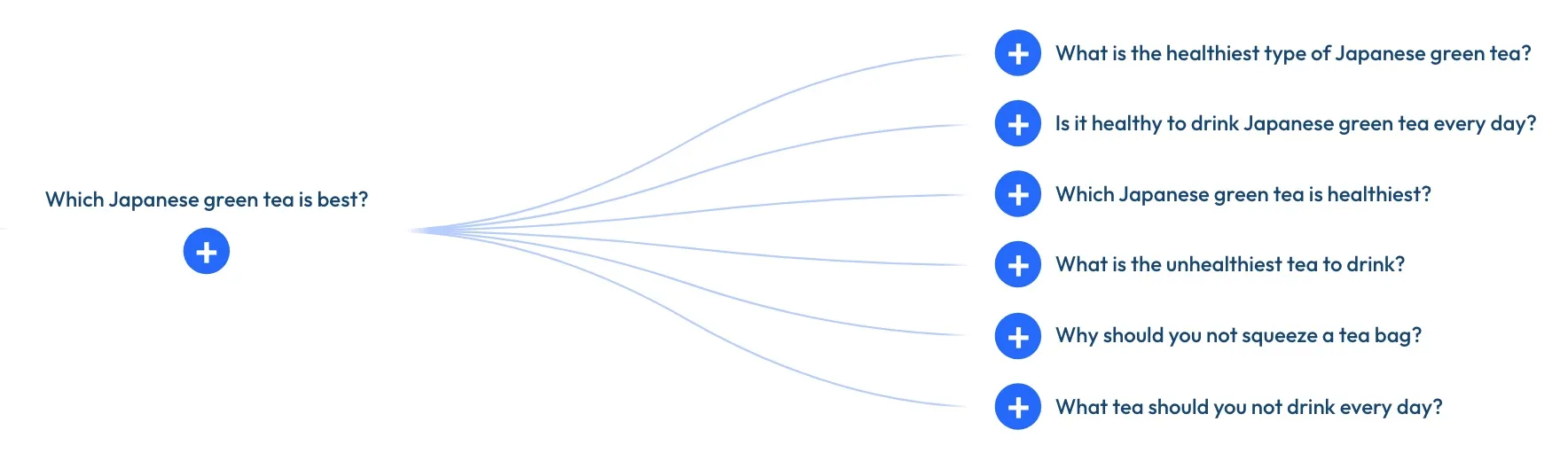
PAA-based keyword research is often my favourite strategy. Use the questions as H2 and H3 headings, and add an FAQ schema to the page.
3. Use common sense
Imagine you were writing an encyclopedia on your niche. You’d list the main chapters and sub-chapters - the index of your book.
How would you name them? There are often only a few good ways. Authors in the past didn’t do keyword research, they named their chapters with common sense.
For example, “How to change an oil filter on a 2010 Toyota Corolla” if that’s what you’re writing about. Sometimes it really is that simple.
Plan your site like a book
List all the chapters, and the structure of your site often becomes clear:
- Main chapters are your pillar posts.
- Sub-chapters are your satellite posts, and each one links back to its pillar.
Example: a Japanese green tea store
Say you sell Japanese green tea to people who are getting serious about it. I looked at the chapters of a few popular books on the subject: Stories of Japanese Tea, A Beginner’s Guide to Japanese Tea and Japanese Tea: A Comprehensive Guide.
Between them, they cover the same six topics, and those make excellent pillars:
- Types of Japanese green tea
- Which Japanese green tea is best?
- Sencha vs gyokuro
- Hojicha vs genmaicha
- How Japanese tea is grown and made
- What is shincha (first flush tea)?
- Yabukita and other Japanese tea cultivars
- Fukamushi vs asamushi: how steaming changes sencha
- Japanese tea regions
- Uji: why Kyoto is famous for matcha
- Shizuoka vs Kagoshima, Japan’s two biggest tea regions
- What makes Yame gyokuro special?
- How to brew Japanese green tea
- The right water temperature for each Japanese tea
- How many times can you steep sencha?
- How to cold brew gyokuro
- Matcha and the Japanese tea ceremony
- Usucha vs koicha
- What does “ceremonial grade” matcha mean?
- Sen no Rikyū and the way of tea
- Japanese teaware
- How to choose a kyusu teapot
- Tokoname vs Banko teapots
- Chawan, chasen and chashaku: the tools for matcha
However, as you may notice, the sub-chapters need work. I doubt there are many searches like “Yabukita and other Japanese tea cultivars”. This is where you use one of the above tools to get PAA data and some better wording for your article.
That list is already 24 posts on Japanese green tea. If you want to become an authority on the topic, these are all things you must cover. They become the foundation of your website’s SEO strategy.
This post is a satellite too, of my guide to international SEO, which I’m writing next.
If your store is mostly product pages, this also fixes thin content. Plan out what people need to know, and you can have a 30 or 40 post SEO strategy in one evening!
Hope this helped. See you in the next one!
Ed